It’s been a strange week of weather. On Sunday a hyped nor’easter delivered only a few inches along the coast, which melted more or less entirely by Tuesday, when another system brought torrential rain along with wind gusts and temperatures in the 50s. Today, more wind and rain overnight, the air pushing 60º, but the high tide put on the main event.
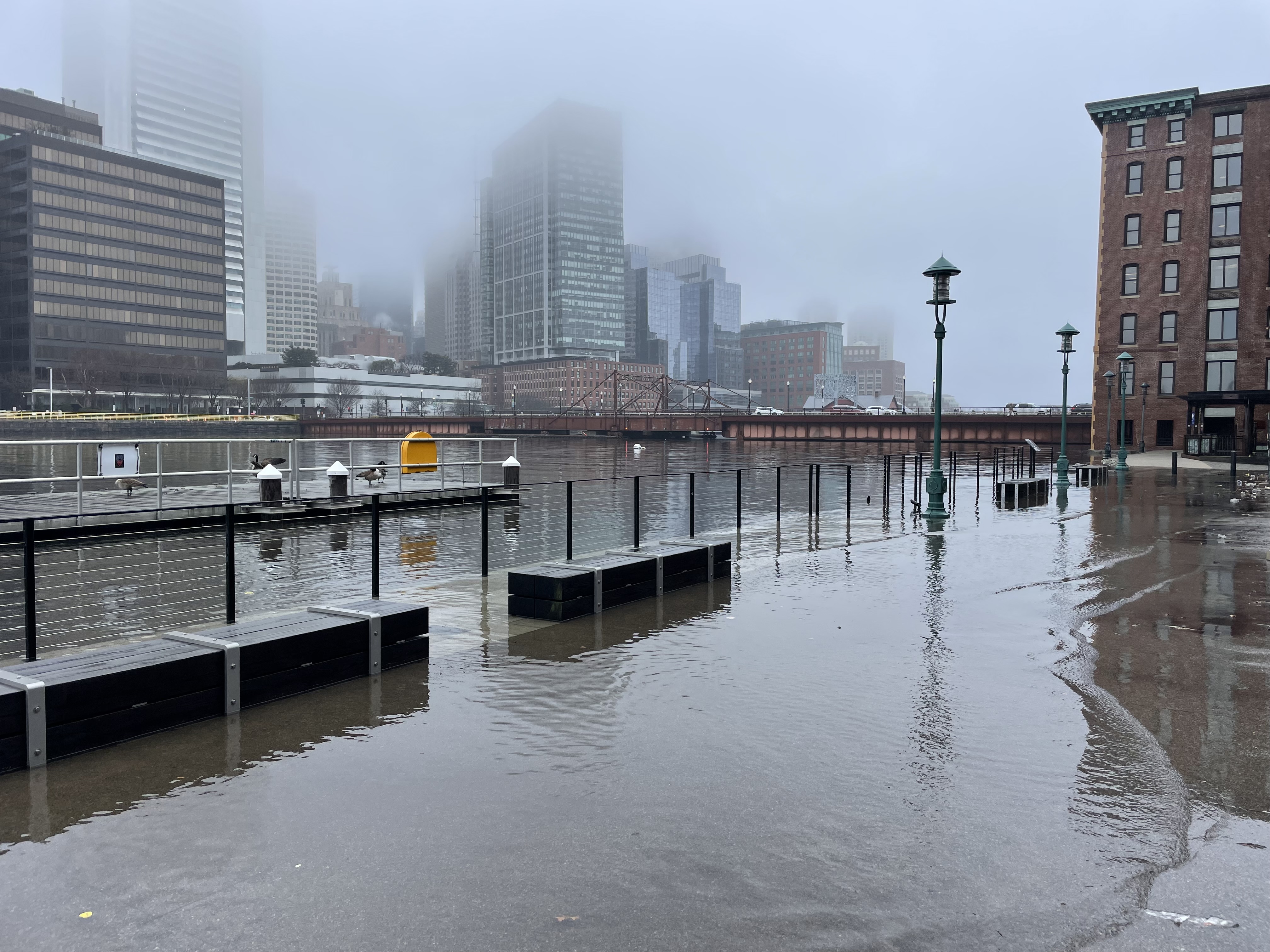
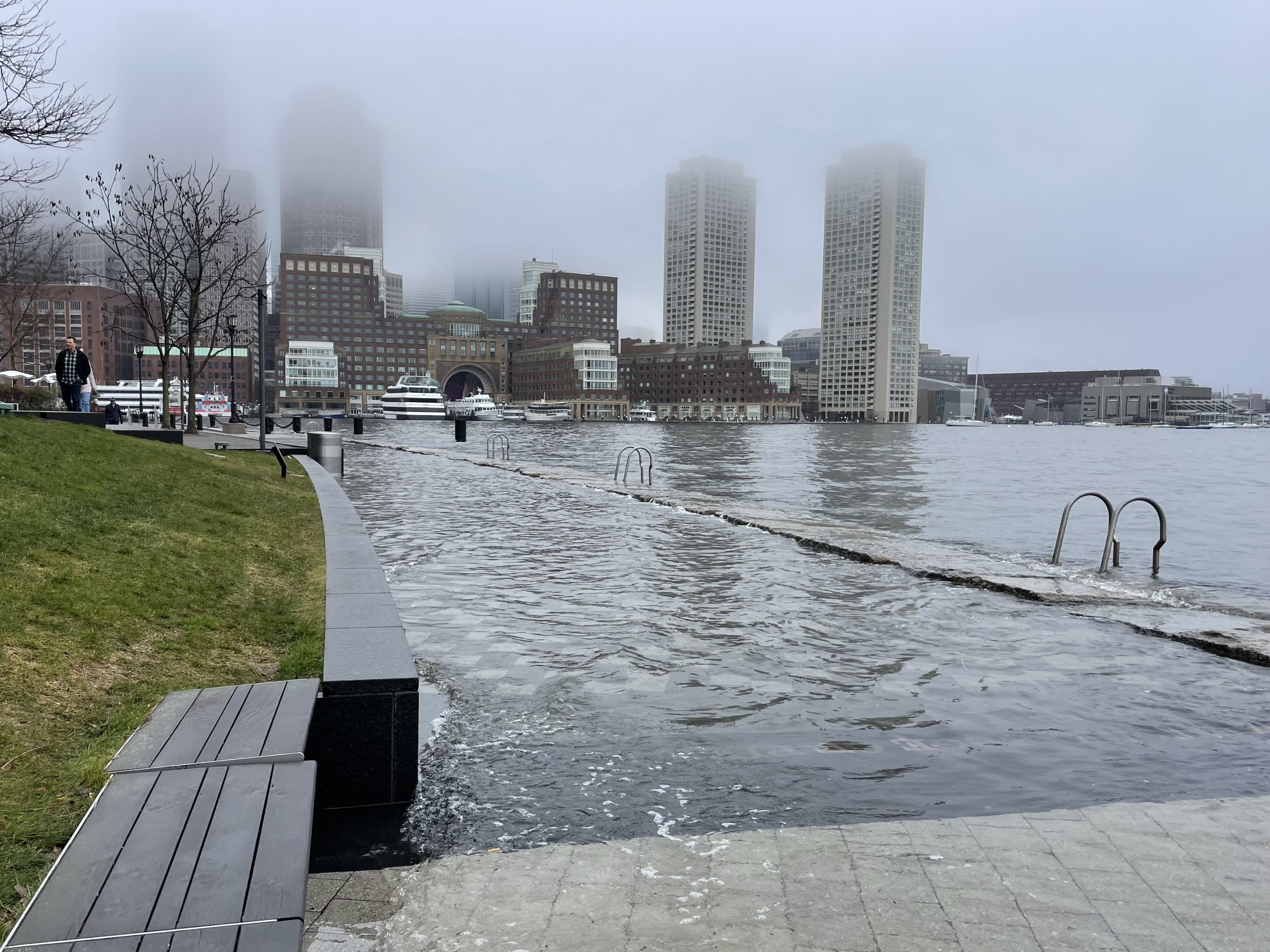
Scenes were a bit more dramatic in the North End:

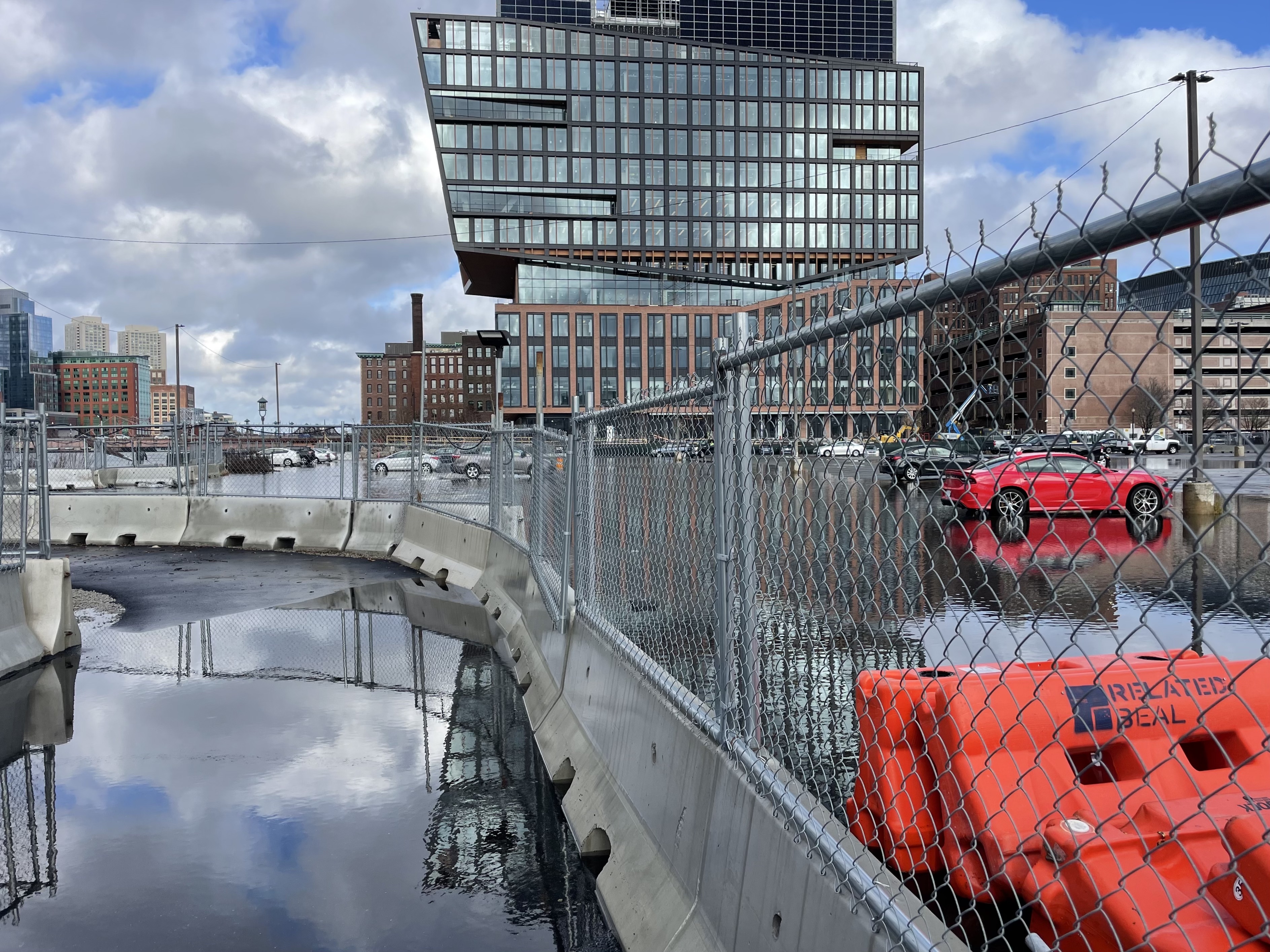
At peak high tide the area along the Fort Point Channel was impassable, flooding the back of Lolita, the edge of the new $700 million Eli Lilly Genetic Medicine Institute building, and part of the parking lot where Related Beal’s $1.2 billion Channelside development is planned to break ground soon.

It’s become something of a cliche to suggest the Seaport will be underwater in 10, 20, 50 years—the floating dumpster of 2018 remains the most famous portent of the deluged future—but this breezy, imprecise way of talking about sea-level rise and vulnerable coastal areas doesn’t offer much beyond signaling a kind of au courant, cynical savvy. That is, what are we really talking about? Occasional major flooding events like today or the one in 2018, which combined an astronomical high tide with a storm surge and wave action from a historic ‘bomb cyclone’?
Or the actual wholesale flooding of the Seaport and waterfront neighborhoods of Boston, such that they would be rendered catastrophically damaged and unnavigable? The new documentary Inundation District appears to be the most serious look at this prospect yet, but so far has had limited screenings and no wider distribution.
Either way, the building continues, and the ongoing major redevelopment of the land along the Fort Point Channel stands out as one particularly high-profile example. At the very least, it can’t be said the warnings are going entirely unheeded: Related Beal’s plans for Channelside mention ‘Fully extended and integrated flood protection resiliency without visible berm obstruction,’ and ‘Raised site (up to +21.5 BCB) to accommodate Sea Level Rise (SLR) which raises the elevation of most site catch basin grates above 2070 high tide line.’
Which gets to the heart of the matter: 2070 sounds impressively far out and distant, likely beyond the lifespan of most of the people managing, financing, and ultimately profiting from the project, but in a city with houses dating back to the 17th century, planning for 46 years from now seems almost comically shortsighted. This kind of mentality is hardly a new development. In the aftermath of the 2008 financial crisis, the banker lingo ‘IBGYBG’ became widely known, featuring in many media reports and even Congressional testimony:
As today’s hearing illustrated, the ratings process became particularly corrupt in recent years, as companies like S&P and Moody’s slapped AAA lipstick on collateralized debt pigs, bending standards to keep the investment banks doing these deals happy and profits gushing in the door.
Eric Kolchinsky, a former team managing director at Moody’s, said he considered what had taken place—that is, what he saw go on first hand—to be securities fraud. Another witness, former Moody’s vice president Richard Michalek, explained the term IBGYBG. “I’ll be gone, you’ll be gone,” he said. “That thinking was driving what was going on.” Make your money, then get out before the whole thing blows.
As usual, the French is more elegant, and in this case more apt: Après nous, le déluge.
 On the Channel