Propaganda, mass surveillance, algorithmic metadata analysis, torture and interrogation: these are responses to a world in which violence is a property of information, understood in information’s terms. The deaths occasioned by terrorism are a mere byproduct of its goal, which is informational violence. It means to attack the minds of those who survive, not the bodies of those who perish. Its aim is to insinuate a feeling in our private lives. Our psyches. And torture means to draw reluctant privacy into the light. Metadata intends to reconstruct an inner truth through the superficial palpation of its outer form. And what of that private place, the last fastness of inviolate humanity? One day it will collapse. Give up the ghost and fall inward. But first it will die by a thousand incursions, as the probes get deeper, smarter, as we learn—like brutalized interrogees—what the algorithms want, reward, and select for, and as our desire to rebel against this becomes yet another way to manipulate us, one more tactic to exploit while the policing function moves inward and installs itself, like the most potent software, in the alloy of our brains.
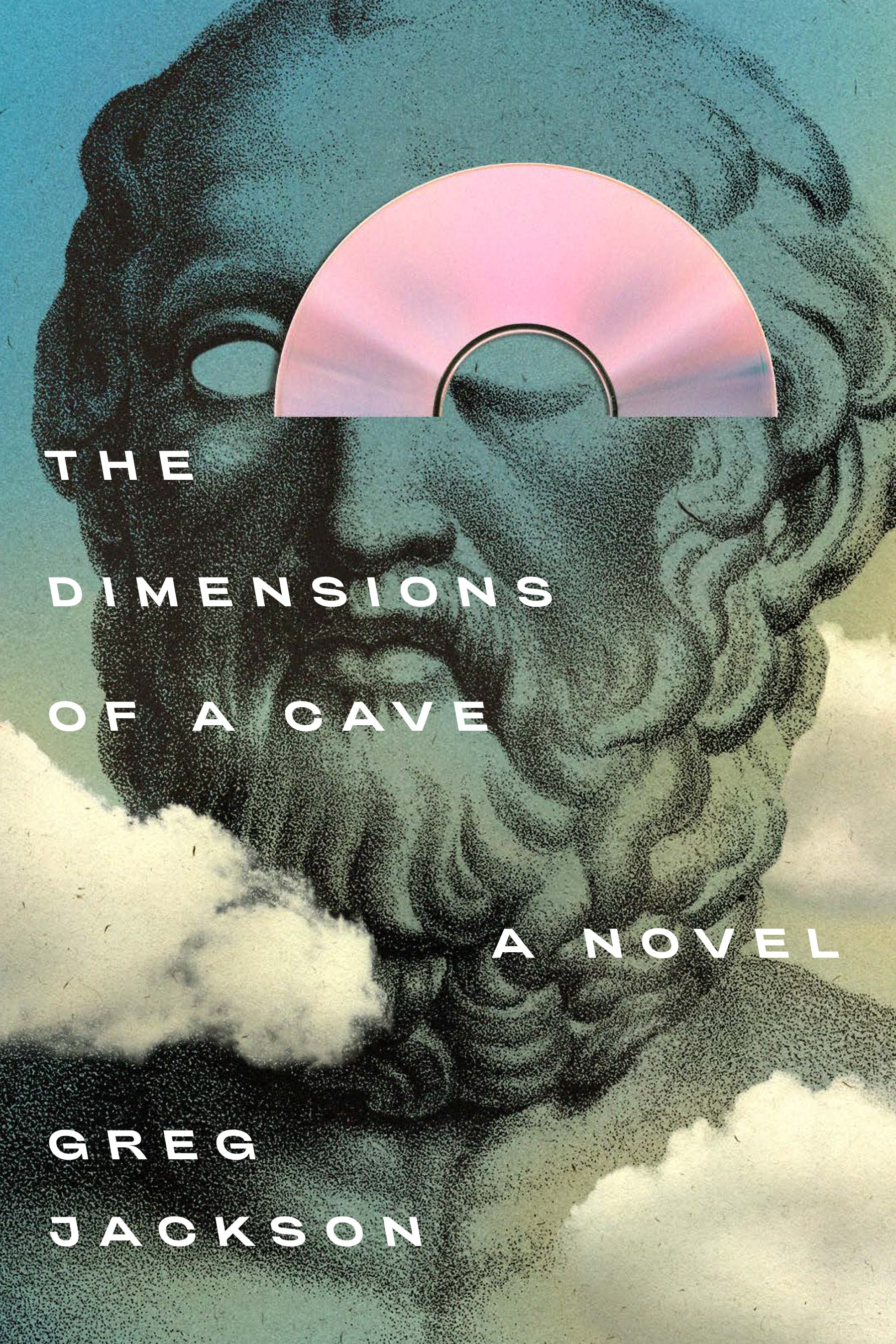
This is an insane book. To review it properly might require the powers of one of the contemporary lit heavies blurbed on the back; dedicated weeks of thinking, writing, and revising; and/or probably a second read altogether. At 476 pages thick with lengthy meditations on technology, power, consciousness, violence, and the nature of reality, that would be a tall order. The novel hasn’t been out two months yet, so that might be why no really serious appraisals have been published: the mention in The New Yorker‘s ‘Briefly Noted‘ kind of reads like they didn’t finish (or much attempt) it, and The Spectator‘s is better but seems choked by a 500 word count limit. The Scotsman‘s literary editor ‘fear[s] this may be a somewhat niche novel,’ but offers a thoughtful précis and some measure of praise: ‘a fascinating set of speculations, even if overlong and overwrought.’
The book is neither, if you’re bought in and along for the ride, or already a fan of Jackson’s distinctive, impossibly sophisticated prose. The metaphysical density and verbal acrobatics are leavened by crisp, bantery dialogue, and a Hollywood-ready plot keeps it all moving along, flexing a range of genre elements: D.C. political thriller, journalism noir, gritty War on Terror exposé, cyber-sci-fi conjecture. The obvious cinematic reference points are The Matrix, The Truman Show, a bit of Inception, but there are enough shades of the The Cell to wonder if Jackson ever saw that unsung Y2K-era relic, in which Jennifer Lopez enters the mind of a serial killer using experimental virtual reality technology.
It is a demanding text, though, and if it’s interesting to think about what might’ve been if Jackson hadn’t ‘cut an entire book out of it,’ ‘over 50,000 words,’ as he says on the Our Struggle podcast, most readers who reach the end will probably appreciate that he did. Sentence by sentence, it has to be some of the most ambitious and balls-out writing put out by a big corporate publisher in recent years, refreshingly unafraid to show off its erudition and command of language. The ‘virtuoso’ tag is apt. Many no doubt will find it over the top—take the opening paragraph:
The island clung to the mainland by a spit of sandbar as low and shingled as a manicured walk and could not therefore be properly called an island. Still we called it that, ‘the island,’ and at times, when the ocean cycles and planets aligned, the perigean king tide with its liquid cargo brought the water up over the lip of that persistent littoral, briefly severing all tie to the shore and bringing the fact of the land into sympathy with its name.
‘Perigean,’ ‘liquid cargo,’ ‘persistent littoral’: Jackson is a master at crafting vivid imagery and supple prosody with the aid of recherché vocabulary, and if it can at times ring as overwrought, it’s mostly just impressive. I’ve never read a novel that required as much reaching for the digital dictionary, and started keeping a list of all the words looked up throughout:
escarpments, cyanotic, pavor nocturnus, susurration, garniture, porphyry, cicatrice, pullulating, agate, donnée, raddled, sempiternal, monitory, lemniscate, ormolu, blancmange (those two used in the same sentence), nitid, collimated, gnarr, cupreous, thewy, pegamoid, benthic, nuncupative, solatium, bruiting, gelid, involute, leporello, fankle, faience, penetralium, scrims, flocculating, pentimenti, falcate, écorché, antres, caporal, hallux, jaillissant, formulary, fulgurant, rufous, embowering profluence (two-for-one), fibril, horrent, crewel, preterition, parterre, ha-ha, barmecidal, moulage, flèchelike, purdah, corolla, sillage, friable, phatic, parti pris, brume, hyaloid, gracile, gentian, bajada, lisle, crypsis, lethean, metic, Lar Familiaris, nescient, tetter, stridulating, voile, apoptosis
Like the plot, the syntax is intricate and nested, the clauses so often winding and refracting that, combined with the expansive lexicon, many sentences have to be read at least twice to grasp their meaning:
In this fading breath of dream I felt the coincident sense-form of so many departures—unrecoverable moments, lost people, the caustic of life’s first bitter lessons—and I understood in the dim way we understand such things that all our experiences, our entire lives, rhyme on the tonality of these emotions, this iterative formulary, at once dull in its repetition and nuanced, layered even, in all the pleated crosscurrents of its ambivalence.
Is it all a bit much? Not really, because Jackson manages to put the writing in service of both a page-turner story and a wide-ranging disquisition on topics timely and timeless: artificial intelligence, surveillance, imperial power, corporate power, the delusions of the self, the futility of fact, the inevitability of atrocity. The last gives the book its major set-piece show of bravado, a 30-page tour of episodes of mass slaughter, enslavement, rape, and mutilation throughout history, structurally and thematically reminiscent of the several-page sentence describing the Theresienstadt ghetto in Sebald’s Austerlitz. The novel is another ‘modern day retelling of Heart of Darkness,’ and this monologue of ‘horrors’ is delivered by its Kurtz stand-in Bruce, who nods to the source material with a sketch of the Congo Free State’s depravity and his later insistence that he’s ‘not some madman gone native.’
The ‘modern day’ twist is twofold: the idealistic newspaper journalist Bruce leaves D.C.to cover the war in Afghanistan, disappears, and resurfaces, in a sense, in an experimental metaverse developed by a defense contractor as a successor to the failed intelligence program SIMITAR—’soft interrogation managed in totally artificial reality.’ He then refuses to ‘leave,’ and his mentor Quentin, whose story on SIMITAR is killed by his editors at the behest of the White House, is tasked with getting him out, or so it seems. Fairly high-concept stuff, and a major changeup from Jackson’s 2016 short story collection Prodigals, such that on the same podcast episode he confesses to a ‘fear that anybody who liked Prodigals is just going to be so kind of disappointed’ by the novel. But that was the vision, to go big and to get away from the more familiar, domestic, sex and drugs and ennui stuff that got tagged as arch ‘satire of the elite’ in reviews:
There’s a little, tiny soupçon… of autofiction in Prodigals, and I got so nauseously sick of autofiction and so angry at autofiction that I decided in my latest book to do the exact opposite, and not put any of my life into it, not put any characters into it who were versions or shadows of myself, and also to try and create a purely imaginative world.
In this he succeeded. The depictions of journalistic tradecraft and the national security apparatus in particular are so convincing that it’s hard to fathom how they could emerge from imagination and research alone, and to some extent it seems they didn’t. Jackson worked for renowned investigative journalist Ron Suskind during the late, fervid Bush years, and had his own brush with the kind of bureaucratic menace and pervasive surveillance that The Dimensions of a Cave probes:
I sent Greg up to New York to do some sort of color reporting about demonstrations and security precautions, because Bush and Ahmadinejad that day were both speaking at the UN at the same time. Greg went up there and was just doing what a reporter does, sort of taking notes, looking around, and he is detained by officials up there, including a State Department intelligence official, various folks in law enforcement, taken aside and essentially grilled for an hour and a half.
They end up taking his notes and also, in a way, kind of threatening him, saying, “Look, we know who you are.” They run his name through every computer in the planet, his mother, other people he knows, certainly me, as well. And at the end of the day, they said, “If anything happens up here in the next week, we know where to find you.”
Similarly, the novel’s layered storylines turn out to be the reverberations of elaborate ploys to control the flow of information, to occlude and to muddle—heads up, plot details follow—as Bruce is goaded into committing an extrajudicial killing of a powerful warlord, partly to neutralize his investigation into shadowy networks of state-sponsored corruption and plunder, and Quentin’s VR odyssey is apparently all a feint to trick him into revealing the identity of his insider source from the original SIMITAR story. So it all gets rather slippery:
It was following this train of thought that Quentin became fixated on the question of Bruce’s reality. Was it possible to know whether his friend had been a fellow dreamer within that liminal sphere or merely a fantasy and projection of Quentin’s own dreaming? It was the difference between an experience of another person and an experience of oneself. It crossed Quentin’s mind that Bruce may have been deluded, baited, as he had been himself, into performing a role in a larger plot, by being made to believe his own contrived fantasy, one in which he was the crusading hero and scourge of the powerful.
It’s a clever way to wrap, skirting and subverting the ‘it was all a dream’ cliche, and if you’re not really reading for the story so much as the sumptuous texture of its telling, it’s still something of a relief to see the ending stuck. As the Greek chorus of Quentin’s fellow journalist friends, for whom he has spun the otherworldly yarn over five long days, warily concludes: ‘We’d been affected by what we heard, and in some way changed. Could we simply retreat back down the bolt-holes of routine to the close, dark corridors that hedged our days?’ Nothing is real, and nothing to get hung about—or if only if it were that easy.
We’re drawing closer to the surface. To the fantasy. For now we content ourselves with the image growing larger and clearer. But at some point our longing to penetrate the image will overwhelm us. We won’t abide separateness. We’ll pass into it—through the glass. Don’t ask me how. Maybe we’ll enter it so slowly it takes generations, and we won’t know we’re inside until it’s too late. Too late! I say it like it’s a bad thing, but won’t it be marvelous? Won’t our dreams come true? Our memories return? Our fantasies take place? Then the limits of our life—the inadequacy of moments, our insignificance—will be no more.
 On the Channel